

Why Are My Leaves Yellowing? A Guide to the Number One Plant Question
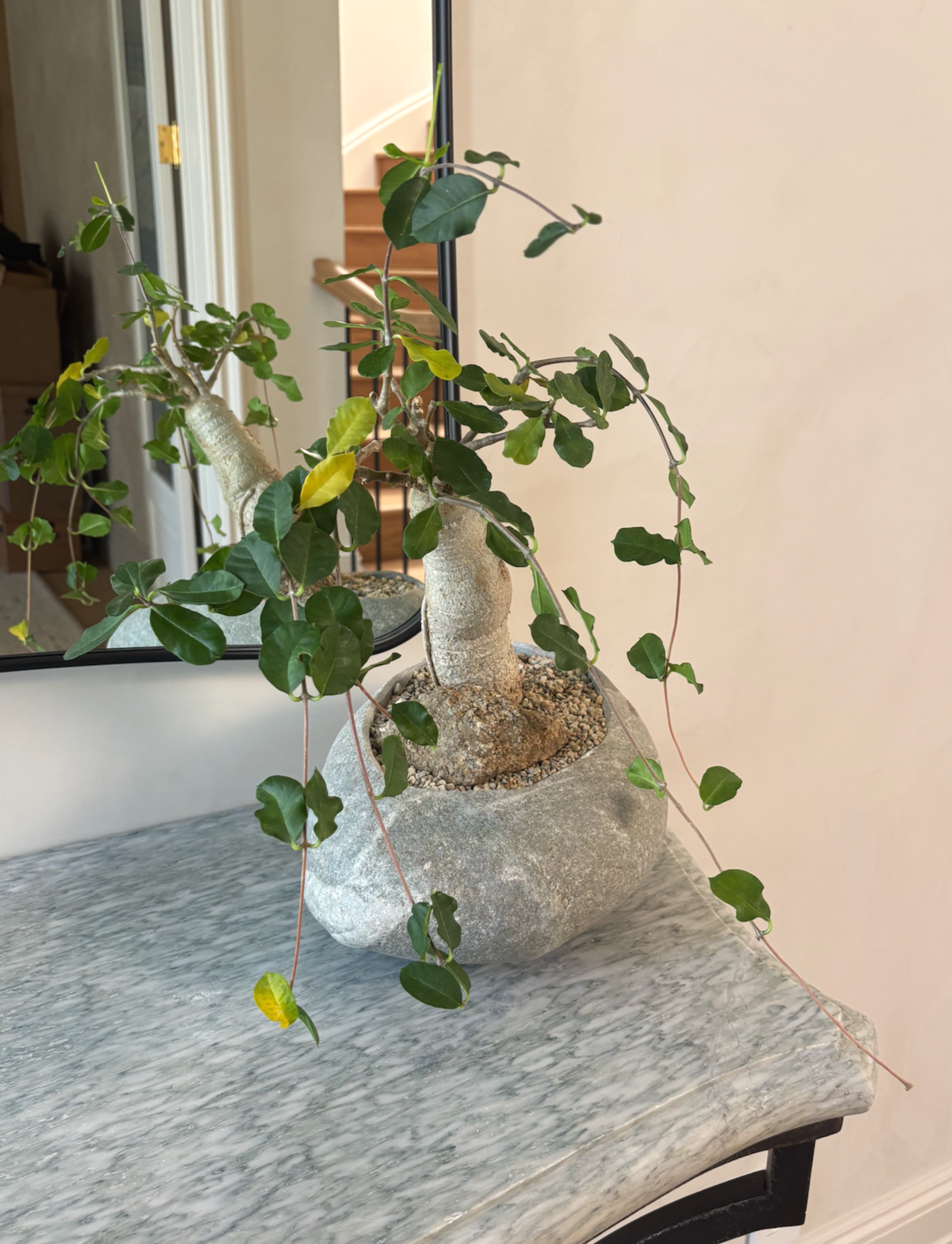
If there’s one question we hear more than any other, it’s “Why are my plant’s leaves turning yellow?!” The tricky part is that yellowing leaves aren’t a single problem, but rather a symptom. Plants use their leaves to communicate stress, and yellowing is one of the most common ways they signal that something isn’t quite right. The key is learning how to read those signals and narrow down the cause.
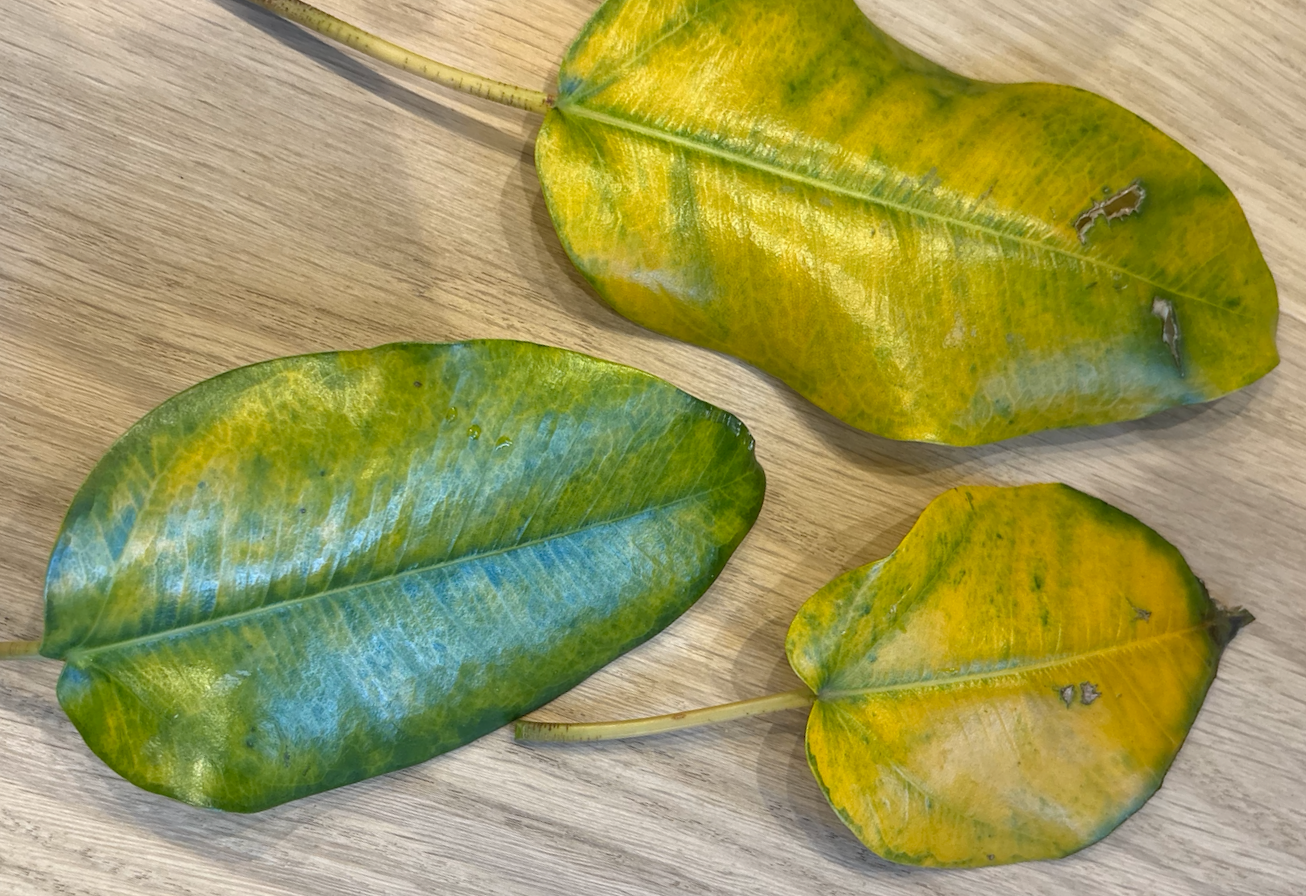
When leaves turn yellow, they are losing chlorophyll, the green pigment necessary for photosynthesis. This signifies that the plant has stopped investing energy into that leaf, due to stress, nutrient deficiencies, or natural aging.
The most common reason for yellowing leaves is watering issues, and this can go in both directions.
Overwatering is the biggest culprit we see. When roots sit in consistently wet soil, they can’t get enough oxygen, which leads to stress and eventually root rot. This often shows up as soft, yellow leaves that may drop quickly. A moisture meter will become your best friend in helping avoid watering too frequently.
On the other hand, under watering can also cause yellowing, usually paired with dry soil and leaves that feel thin or crispy. When the soil has been dry for too long, it can become hard or even hydrophobic, and does not absorb the water it needs. The difference comes down to moisture levels—checking the soil is always your first step.
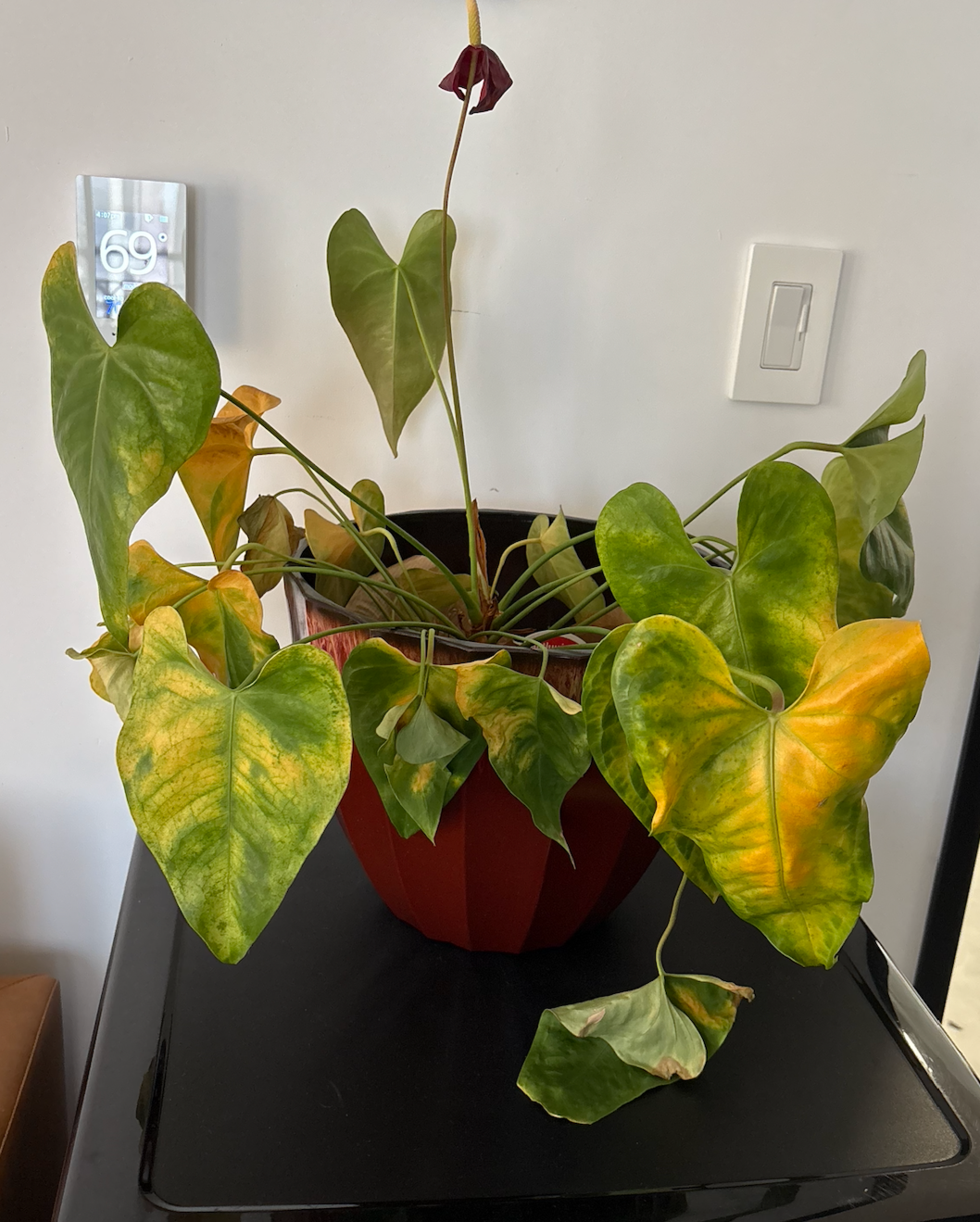
This anthurium was discovered to be sitting in too much water. Always check after watering that excess water is removed.
This ficus Audrey was especially thirsty after a heat wave; they tend to drop leaves when under watered.
Light conditions are another major factor.
Plants that aren’t getting enough light may start to yellow and drop older leaves as they struggle to sustain all their growth. This is especially common in lower-light corners or during winter months when daylight is reduced.
Too much light, however, can also cause stress, sometimes showing up as yellowing combined with scorched or faded patches. Placement matters more than most people realize, and even small adjustments can make a big difference.
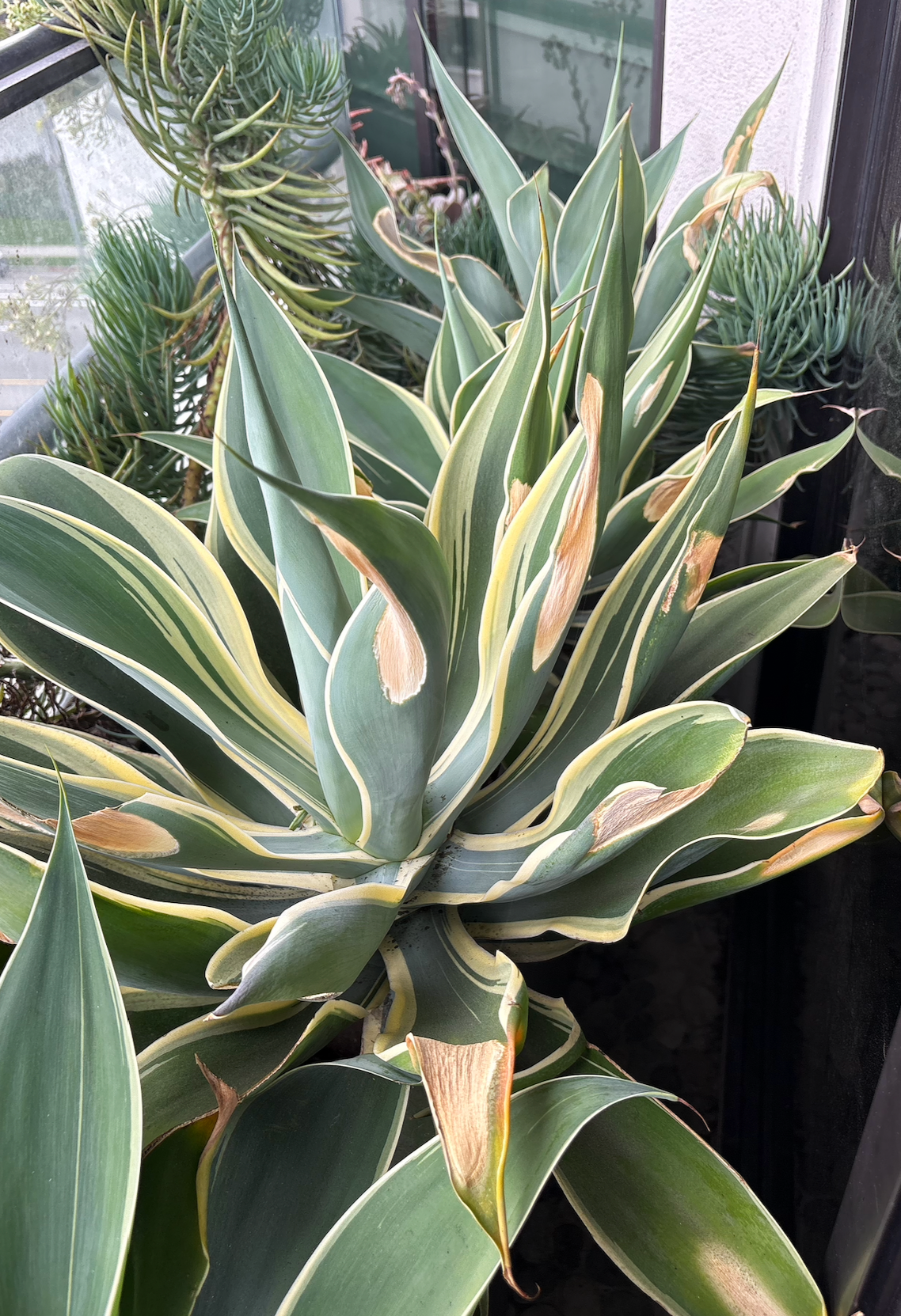
This foxtail agave was scorched from rainfall followed by intense light. The water that remained on the leaves magnified the sunlight causing the cells to burn.
Pests are another possibility.
Especially if the yellowing is uneven or paired with other signs of damage, pests could be your problem. Common culprits like spider mites, mealybugs, and thrips feed on plant tissue and can cause leaves to discolor, weaken, and eventually drop.
If you notice speckling, residue, webbing, or visible insects, it’s worth taking a closer look and a deep cleaning. Catching pest issues early can prevent more widespread damage.
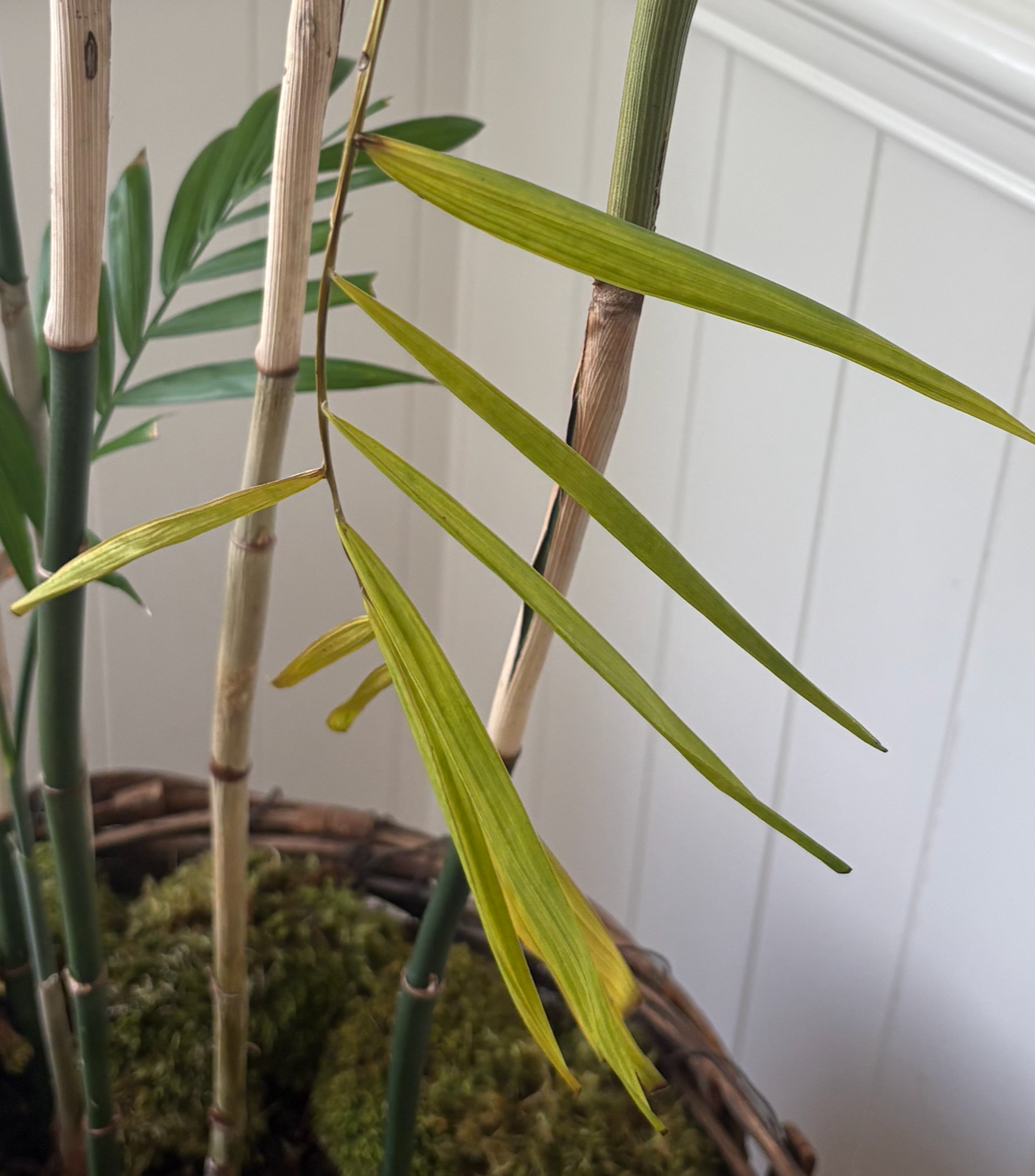
Mealybugs hidden in this bamboo palm sucked the sap out of the leaves and stem, causing the plant stress.
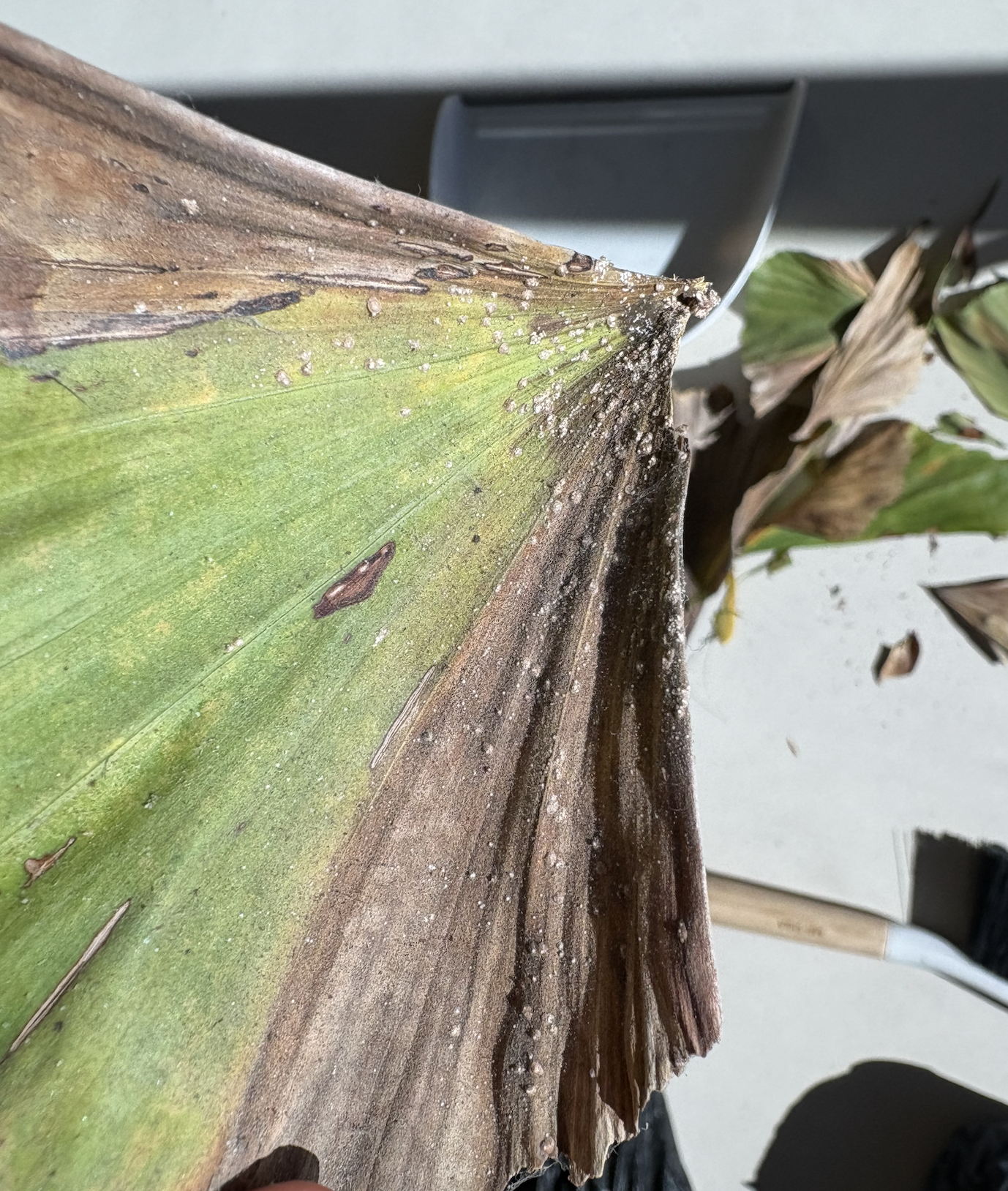
This fishtail palm was battling a scale infestation when leaves began to yellow.
Yellowing is also tied to natural aging.
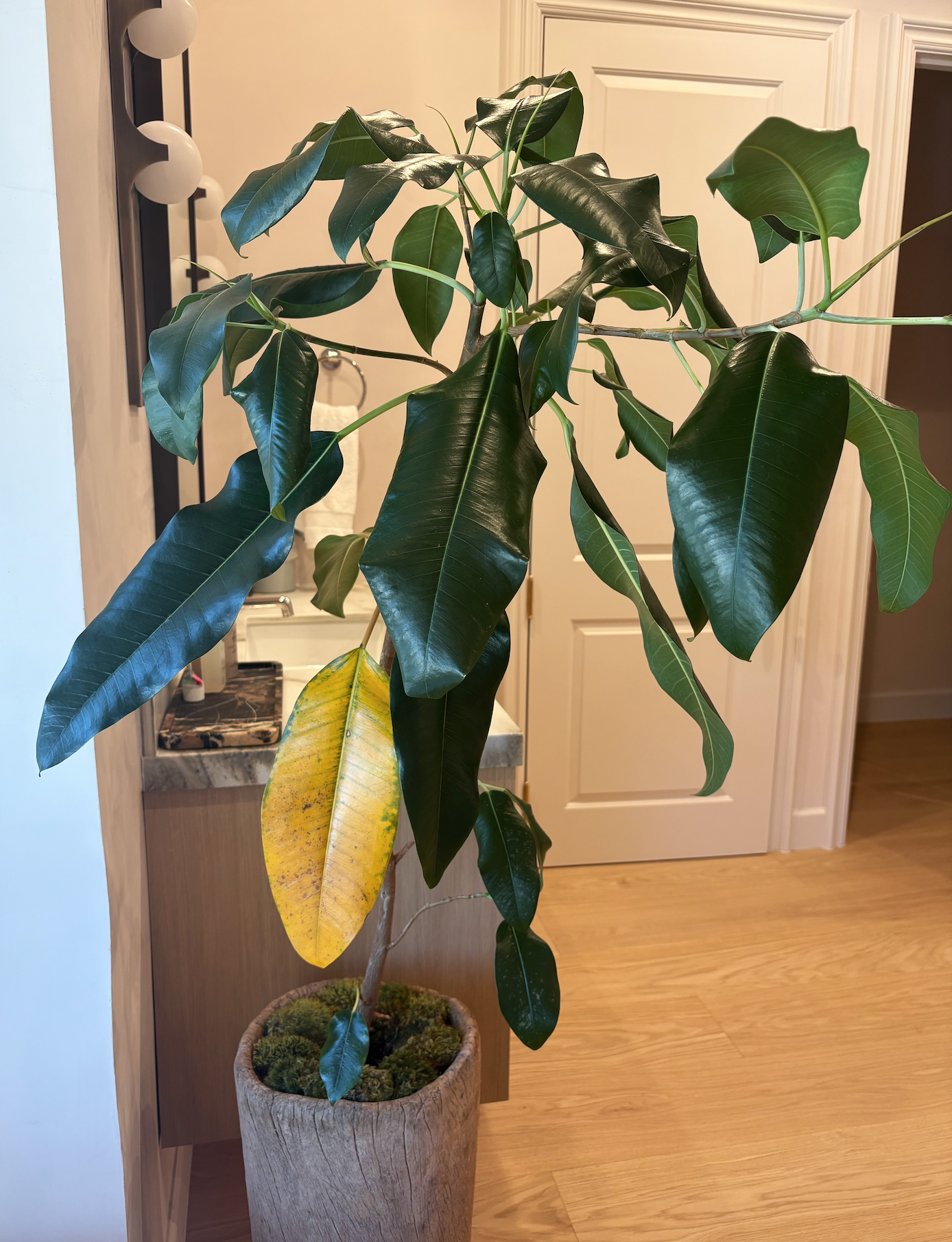
It’s completely normal for plants to shed their oldest leaves over time, especially lower leaves that aren’t getting as much light. If the yellowing is occasional and limited to one or two older leaves, there’s usually no cause for concern. Plants are constantly redirecting energy to new growth, and part of that process includes letting go of older foliage.
This ficus had a huge growth spurt! To focus the energy upwards, some of the lower leaves had to be shed.
There are environmental factors to consider.
Sudden temperature changes, drafts, or dry indoor air—especially from heaters or air conditioning—can all stress plants. You might see yellowing after a plant has been moved, exposed to a new environment, or placed near a vent or window with fluctuating temperatures. Plants thrive on consistency, so even subtle changes can have an impact.
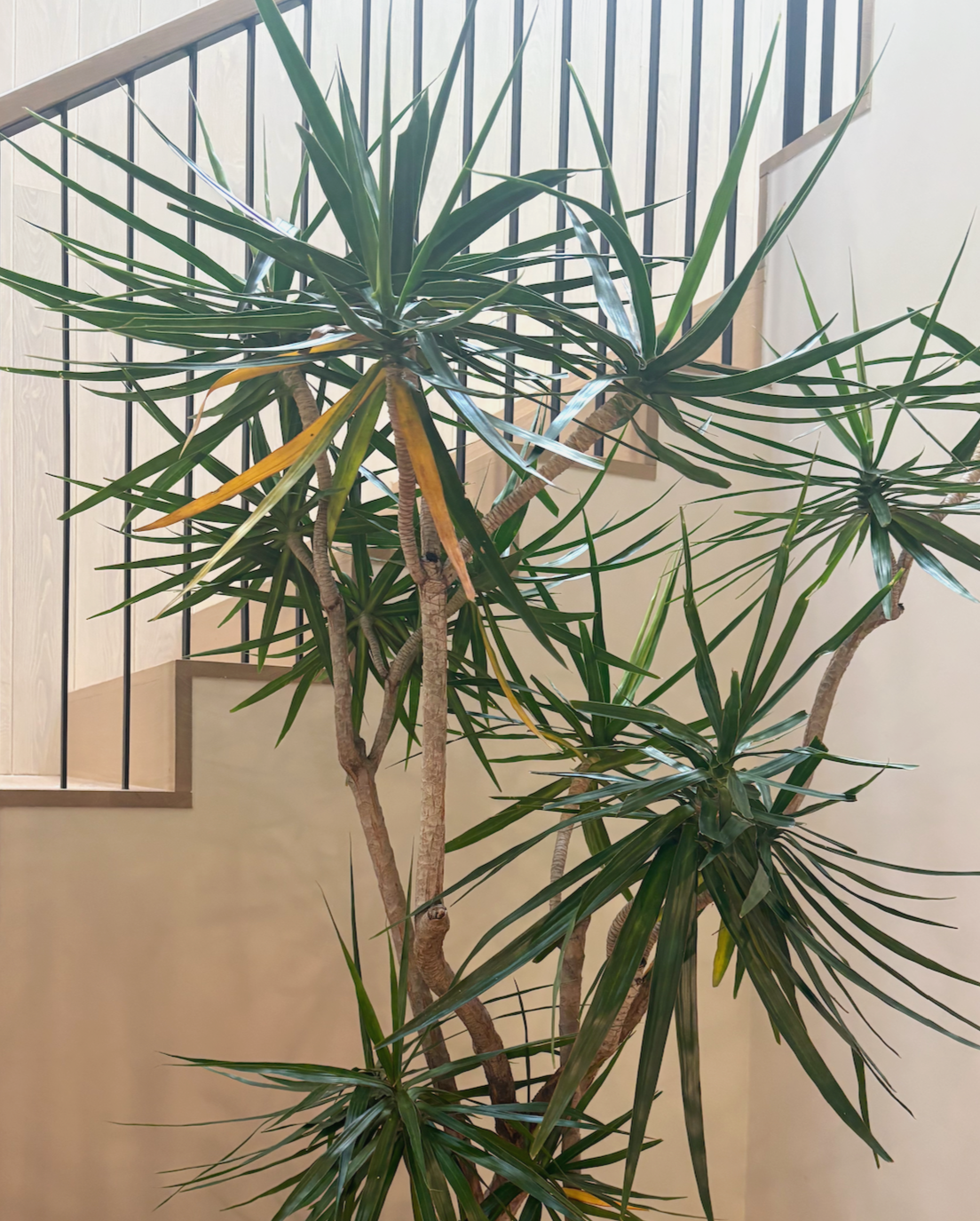
The transition to winter shocked this dracaena placed under a heat vent. Redirecting the airflow set it back on track.
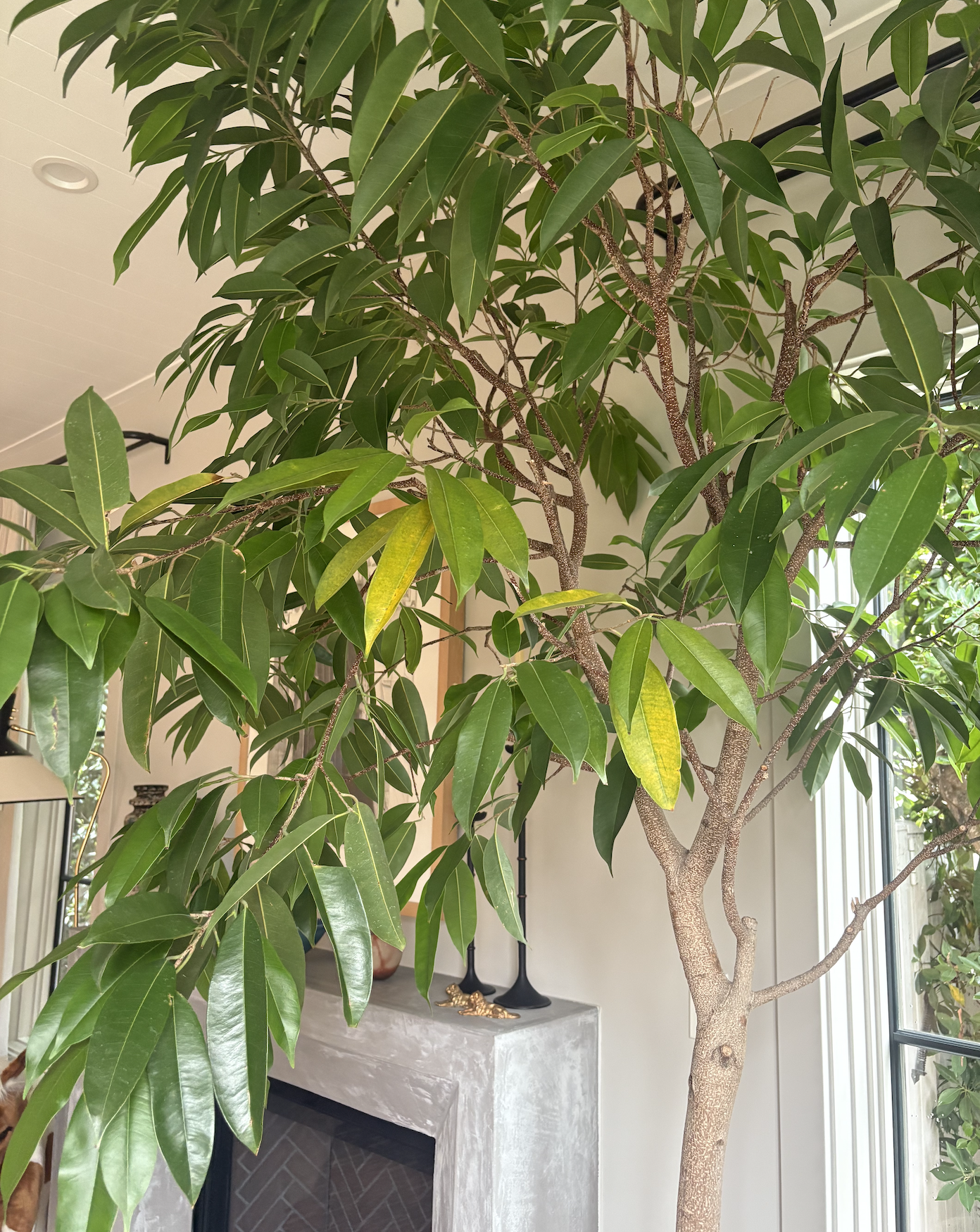
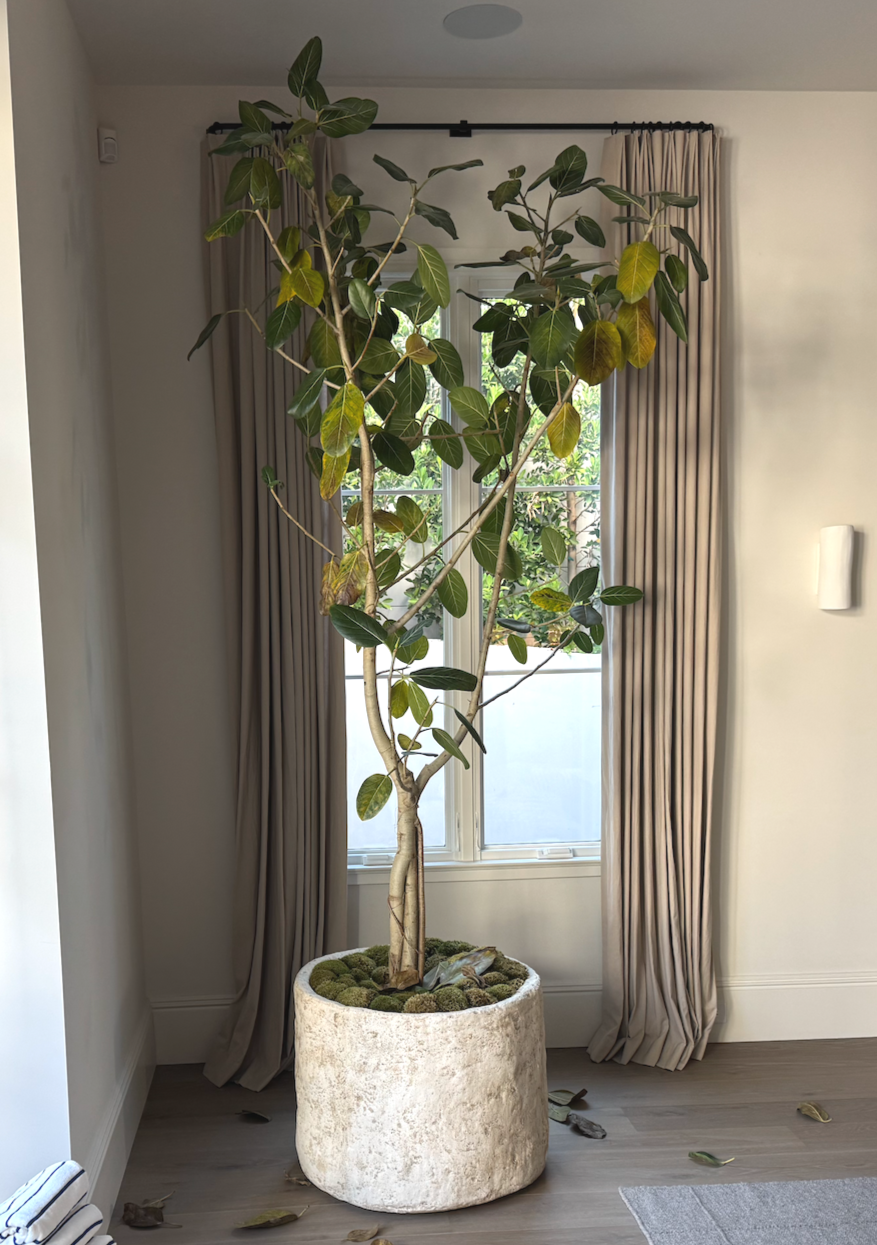
Curtains in this room had been drawn for a week, blocking the light this ficus Amstel is accustomed to receiving.
With so many possible causes, the best approach is a simple process of elimination. Start with the basics:
Check the soil moisture
Review the plant’s light conditions
Inspect for pests
Consider any recent changes in environment or care
From there, we adjust one factor at a time and give the plant a little time to respond. It’s best to avoid making multiple changes all at once, as this can make it harder to pinpoint what’s actually helping.
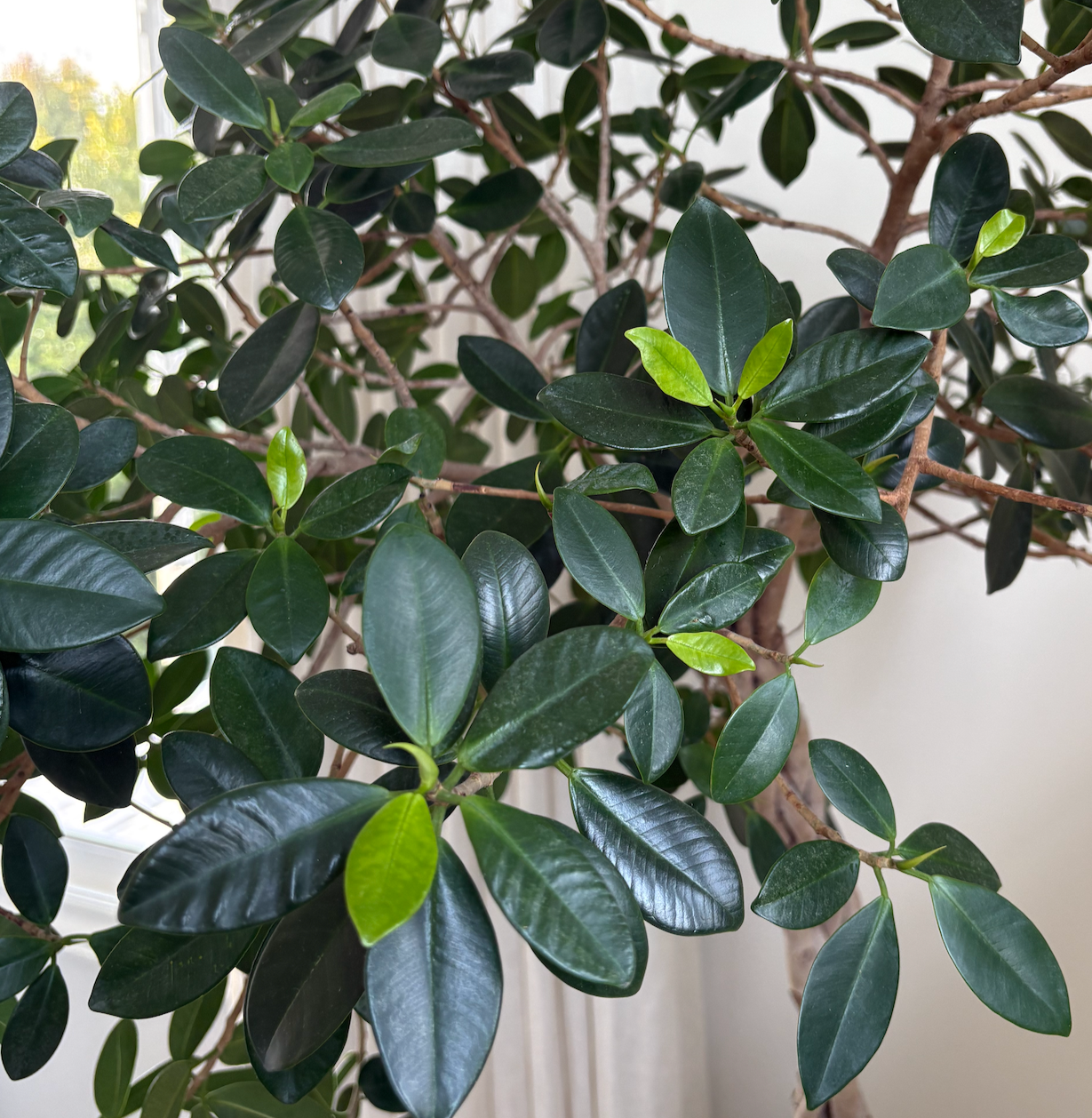
At the end of the day, a yellow leaf isn’t a failure—it’s information. It’s your plant’s way of asking for a small adjustment. With a little observation and a thoughtful approach, most causes of yellowing can be identified and corrected quickly. And once you get familiar with the patterns, diagnosing these issues becomes second nature. Soon, you’re plants will be trading the yellow for bright green healthy growth.
