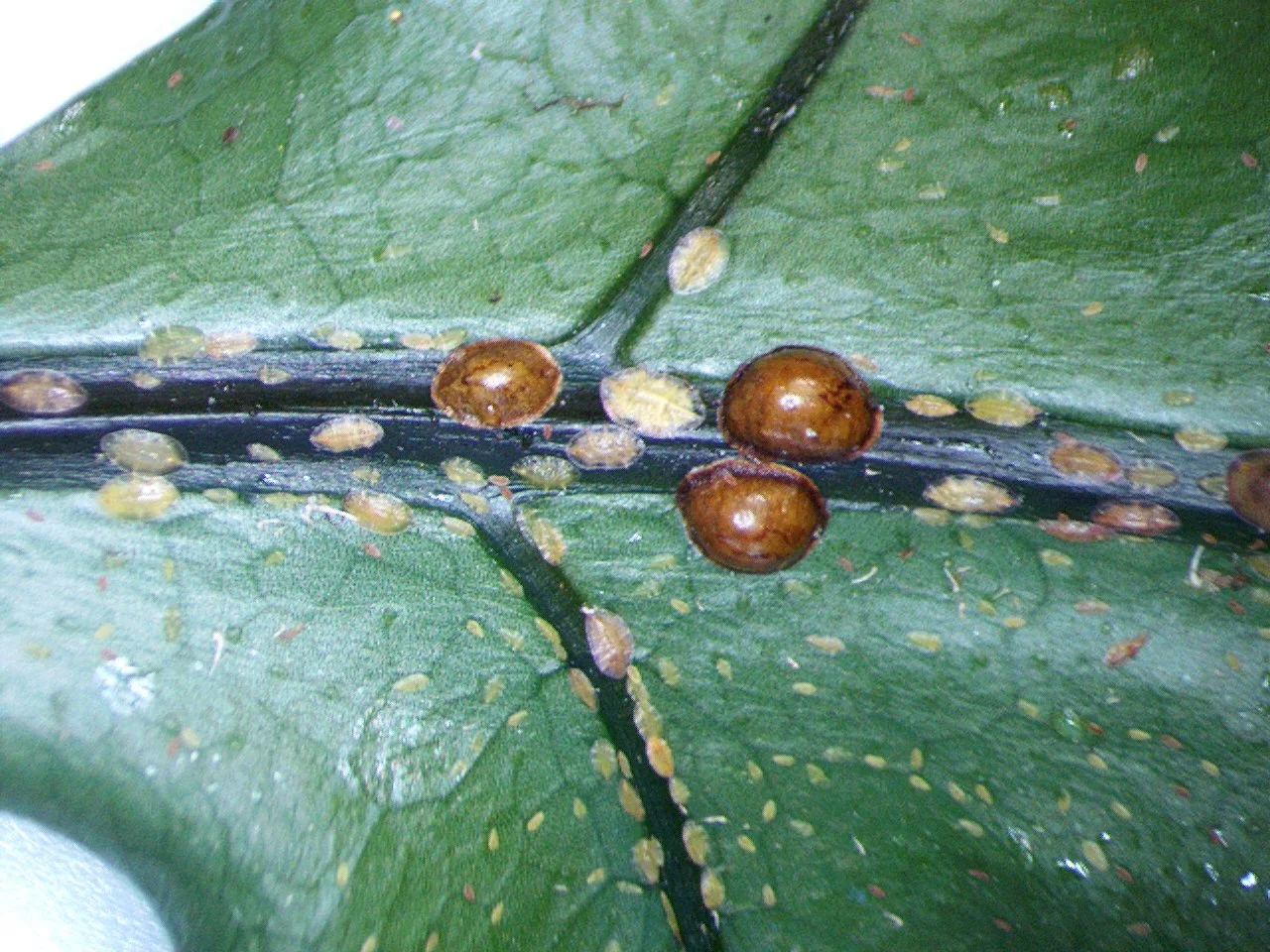
Scale: The Sap-Sucking Pests
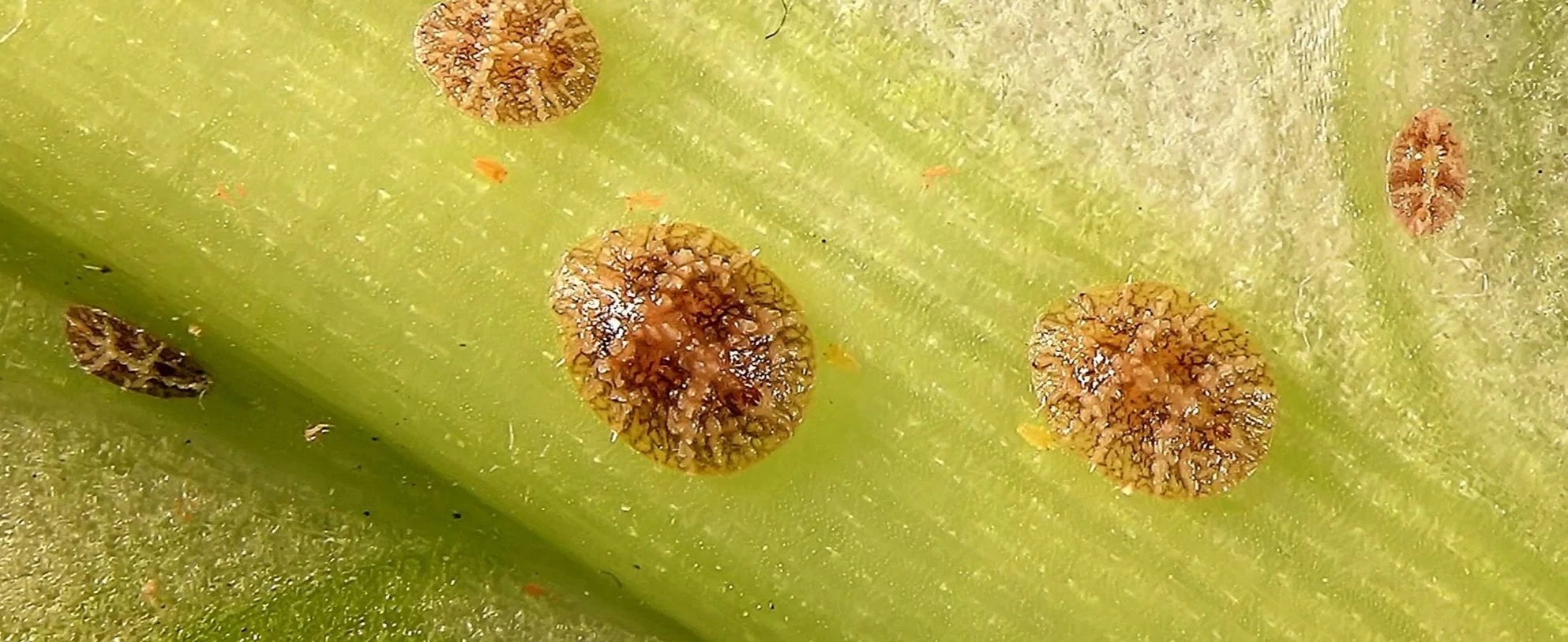
If you have ever looked at a leaf or a stem and thought “Is that part of my plant…or a bug?” chances are you have encountered scale insects. These little pests don’t jump or crawl like aphids; they latch on, stay put, and quietly feed on your plant’s sap. This makes them easy to overlook until they have already caused real damage. Let’s break down what scale insects are, how to spot them early, and what you can do to stop them the right way.
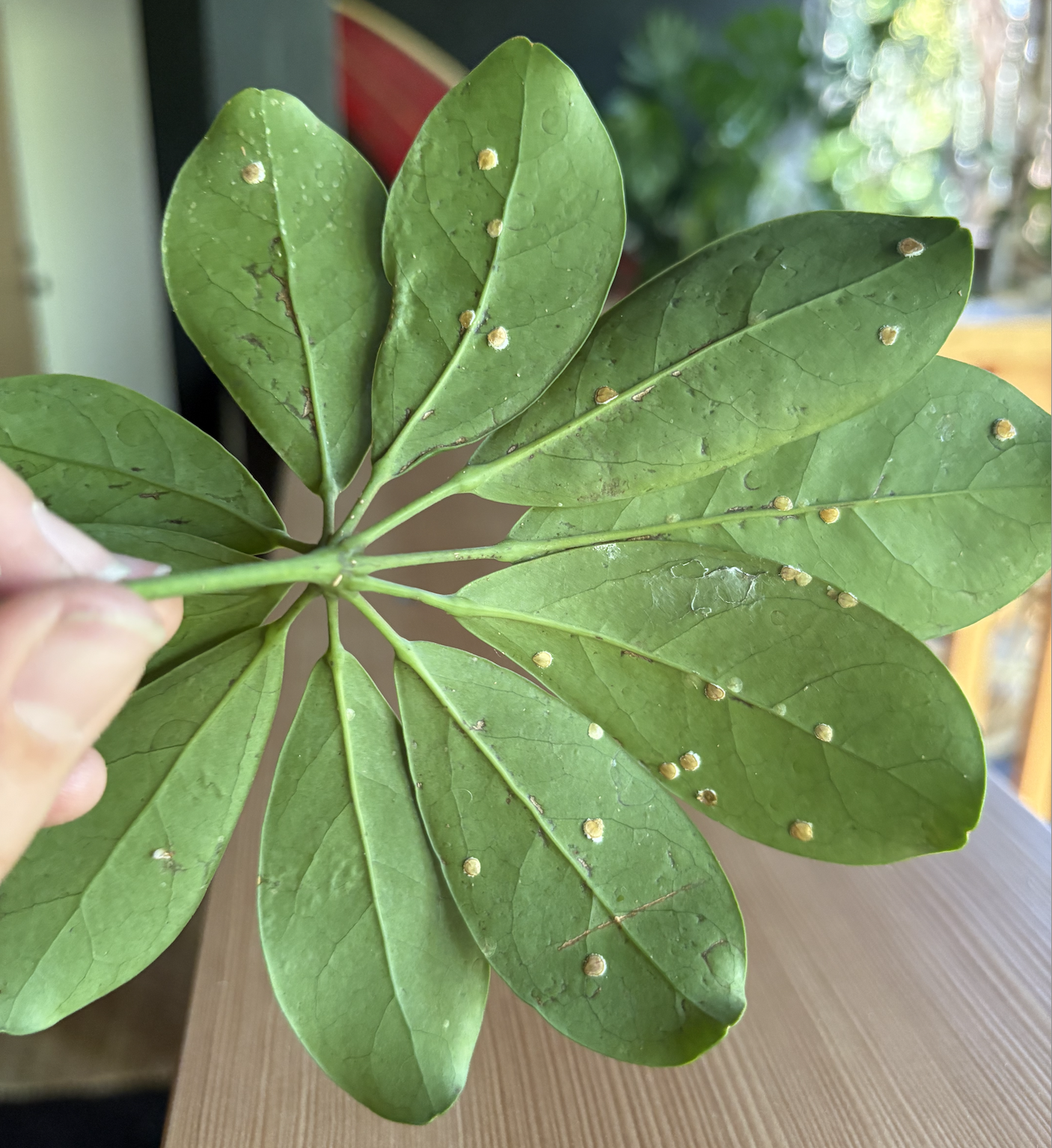
What are scale insects?
Scale insects are tiny-sap-sucking pests that latch onto stems and leaves and form a hard, shell-like covering over themselves. They hatch under the protective shell of their mothers and enter their “crawler” phase, the only time the are mobile and spread across the plant. Because they do not move once they settle, they develop shells that often look like part of the plant, like little brown or tan bumps rather than bugs. There are different types of scale (like soft scale and armored scale) but all of them feed by inserting their needle-like mouths and drinking sap, weakening the plant over time.
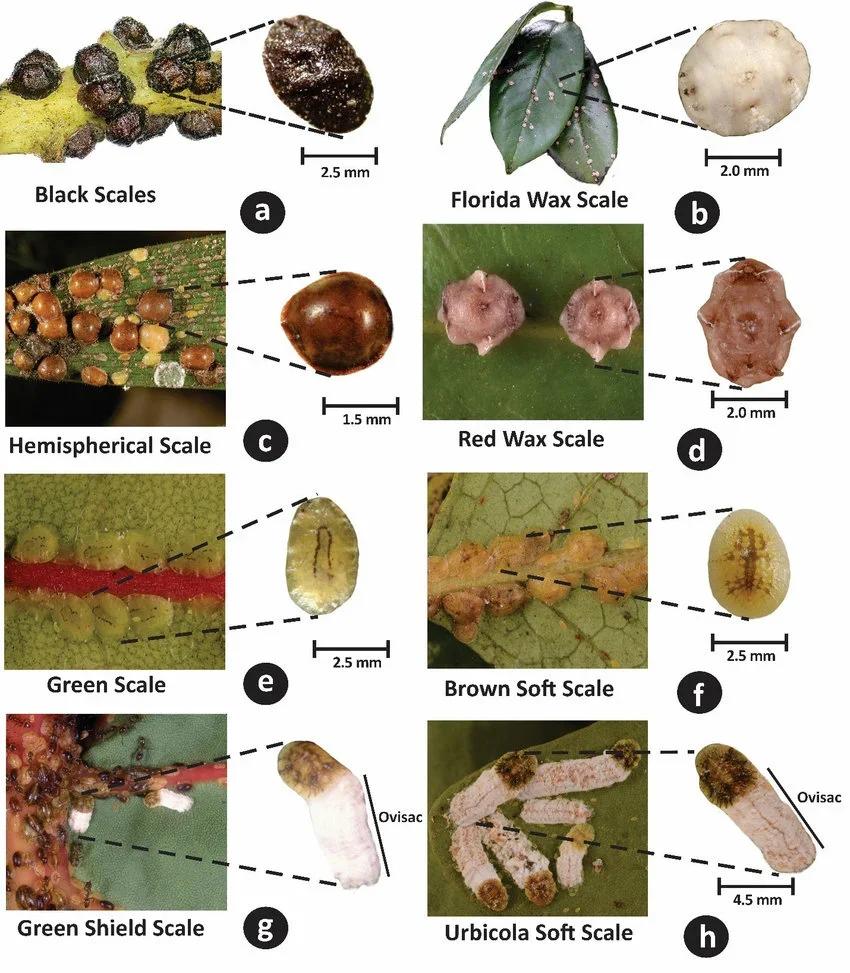
A sampling of the most common types of scale. There are over 7,800 species worldwide!
Early Sign Scale has Arrived
Scale insects can be pretty sneaky with how tiny the babies are. Early infestations are easier to manage because the youngest scale are still small and more vulnerable. Once they develop their protective shells and honeydew, they are tougher to knock off with sprays alone. Here are some signs to watch out for:
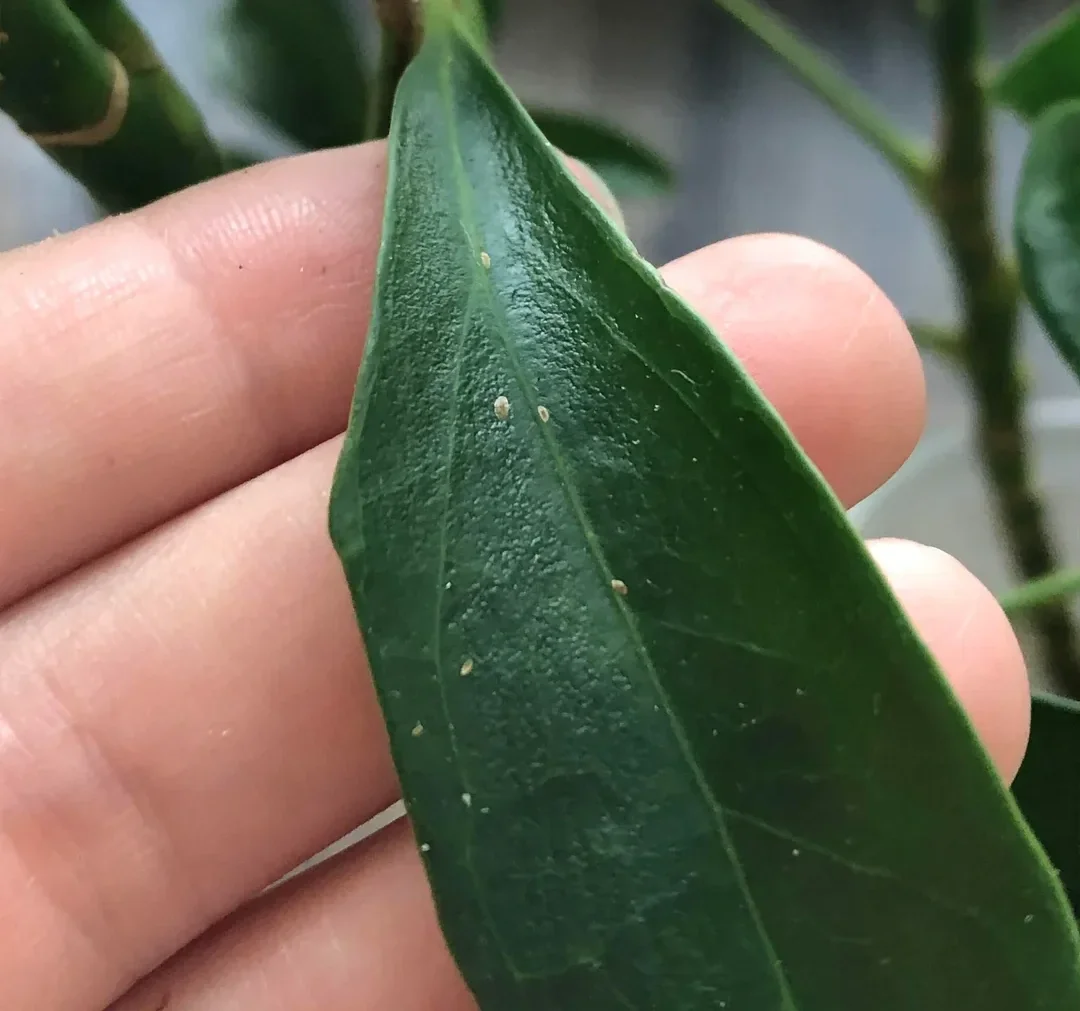
Small brown, tan, or grey bumps on stems and leaf joints that don’t move. These can be microscopic!
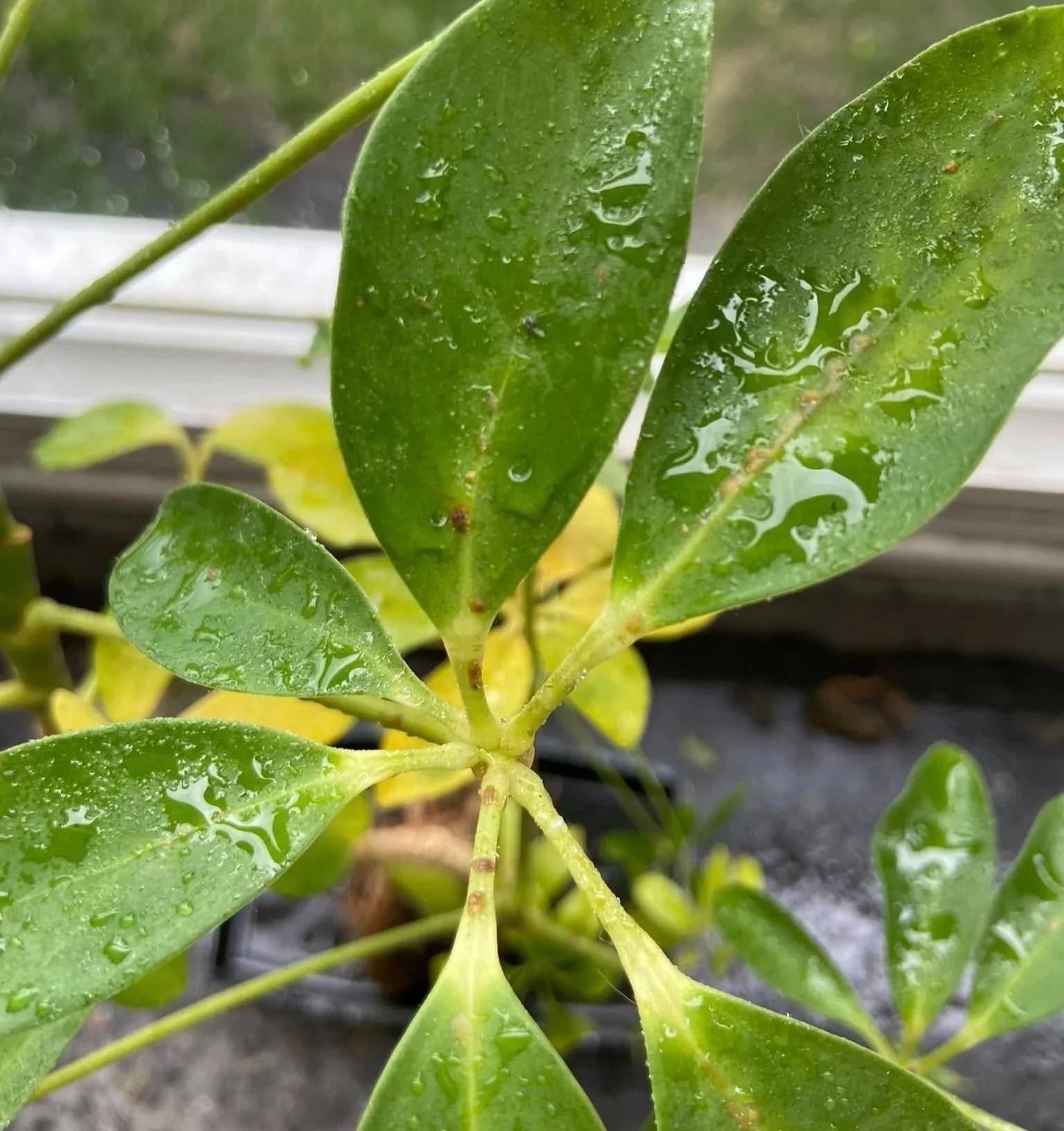
Sticky residue, or honeydew, on leaves and nearby surfaces and floors
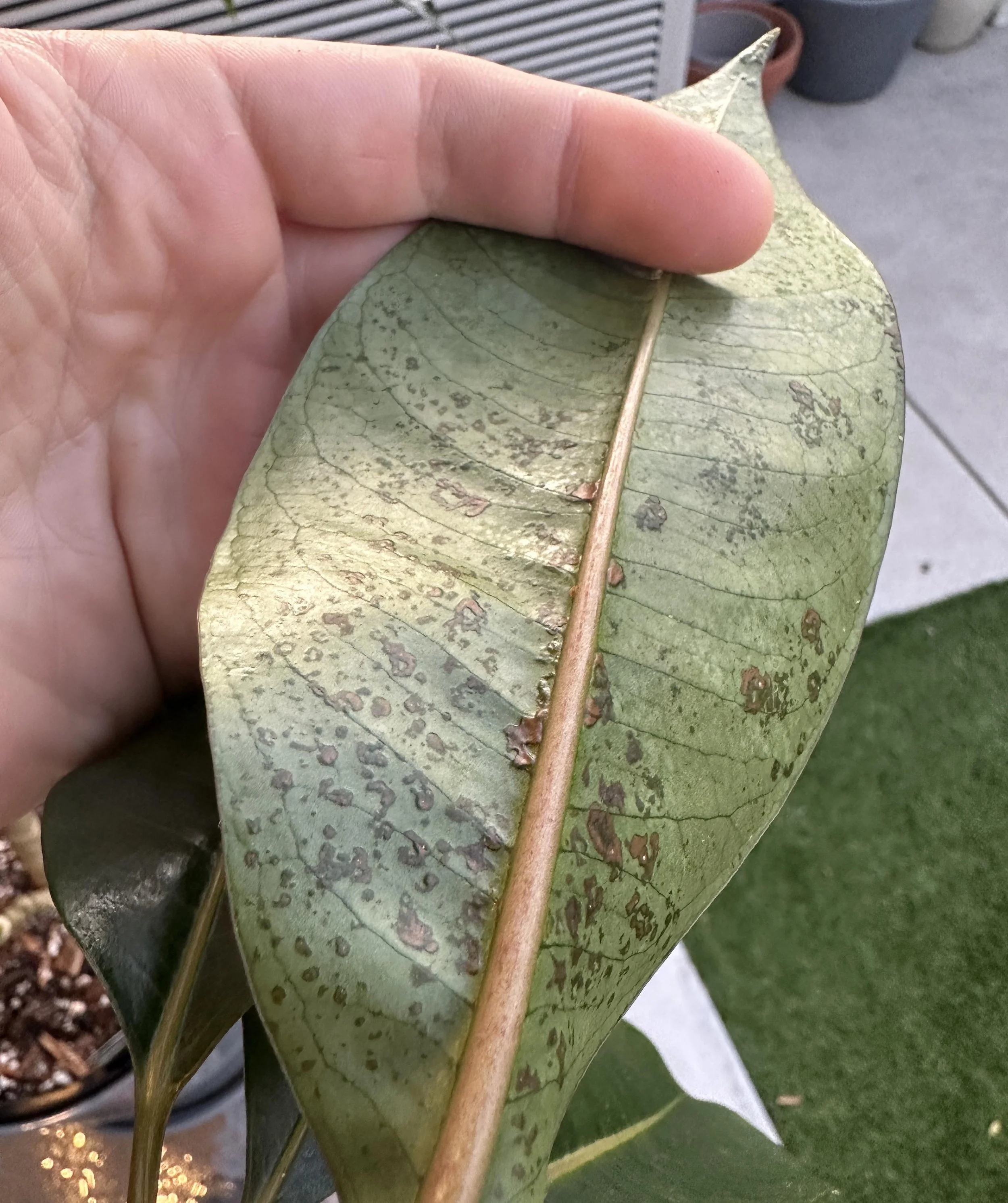
Damaged leaves from scale scraping and sucking sap out
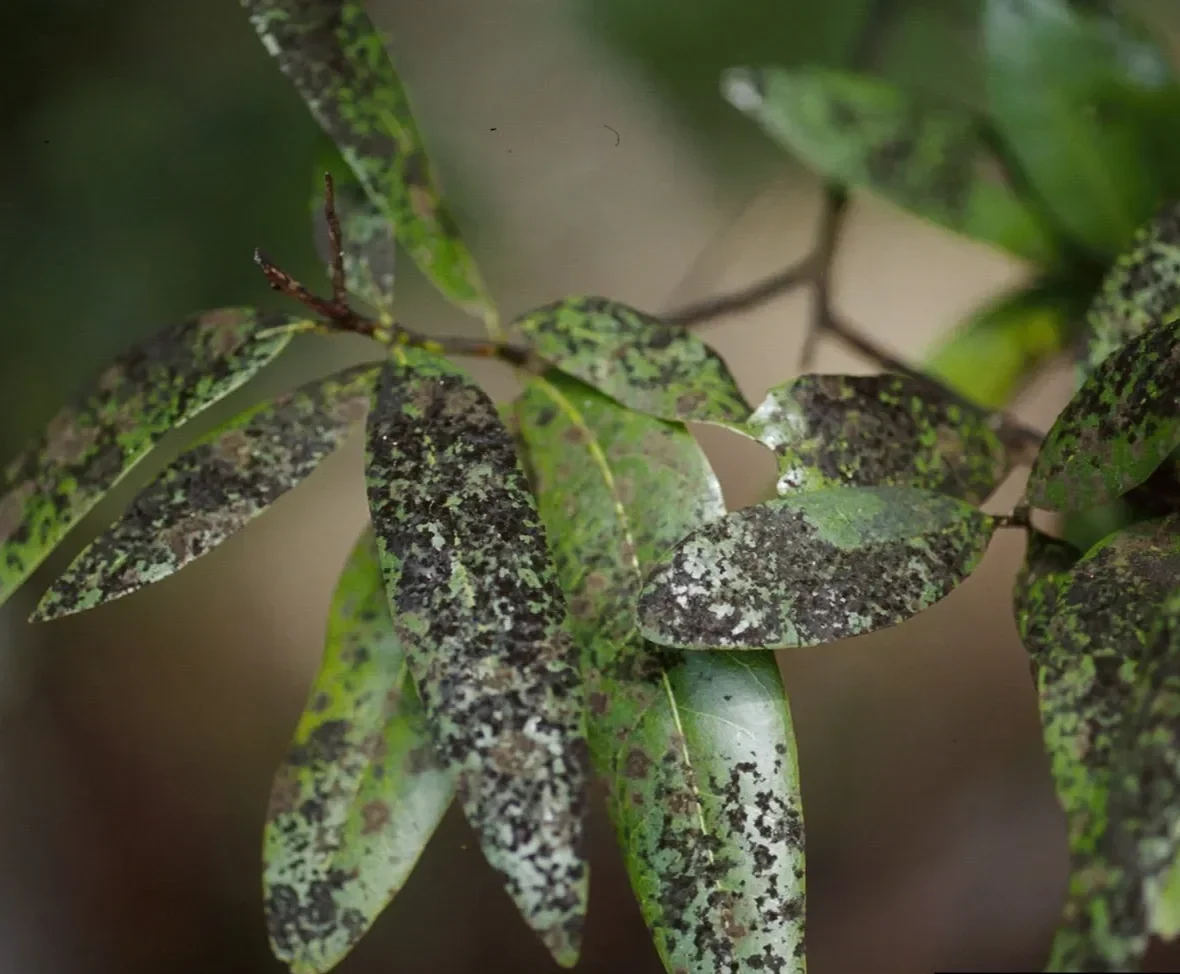
Sooty mold collecting on the honeydew, which further blocks light and stresses the plant
How We Treat Scale During Maintenance Visits
At Plantitas Verdes, scale bugs are one of the things we look for every time we inspect a plant. Our strategy combines careful removal with safe, effective products and regular follow ups.
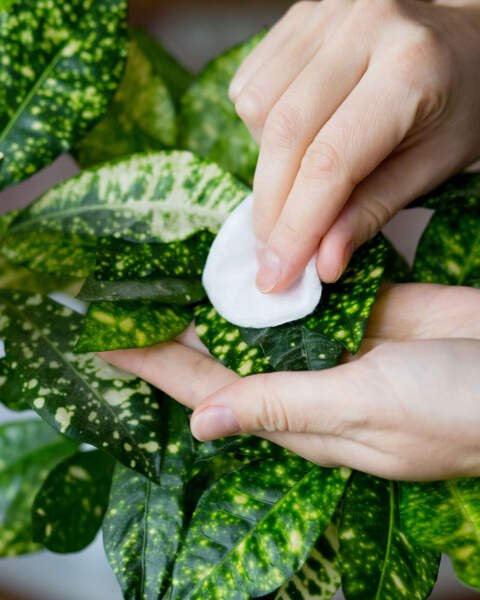
Isolate the plant. Scale spreads quickly and quietly. Baby scale can move short distances or be carried by touch.
Manual removal. We gently scrape the scale off of the plant using fingernails or towels. This gives an immediate break from the sap-sucking.
Wipe down with a fresh towel. For light infestations, we use Arber bio insecticide sprayed, this will disrupt the lifecycle of pests too small to be seen and removed.
Follow up and Prevention. Because scale have multiple life stages, treatments are repeated weekly or bi-weekly until we no longer see signs.
Scale insects may look small, but their impact is outsized. If left untreated, they can sicken plants slowly and quietly, and because they are stationary once settled, it’s easy to miss them. Regular maintenance catches these pests early and keeps plant collections thriving.