

Overwatering and Root Rot: What’s going on beneath the surface
Overwatering is one of the most common plant care mistakes we see, and often it comes from a place of good intentions. Many people will see a plant with wilting leaves and go running for the watering can, however it may actually be the exact opposite thing they need.
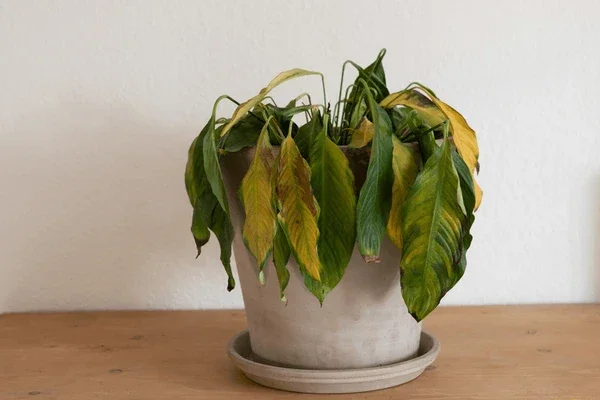
When soil stays consistently wet, roots are unable to access the air they need to function properly. Over time, this lack of oxygen creates the ideal environment for fungi and bacteria to thrive, leading to what we call root rot. Once roots begin to rot, they lose their ability to take up water and nutrients, which is why the plant looks wilted. Yellowing leaves, sudden leaf drop, and a general look of decline are all common signs that something is going wrong deep in the soil.
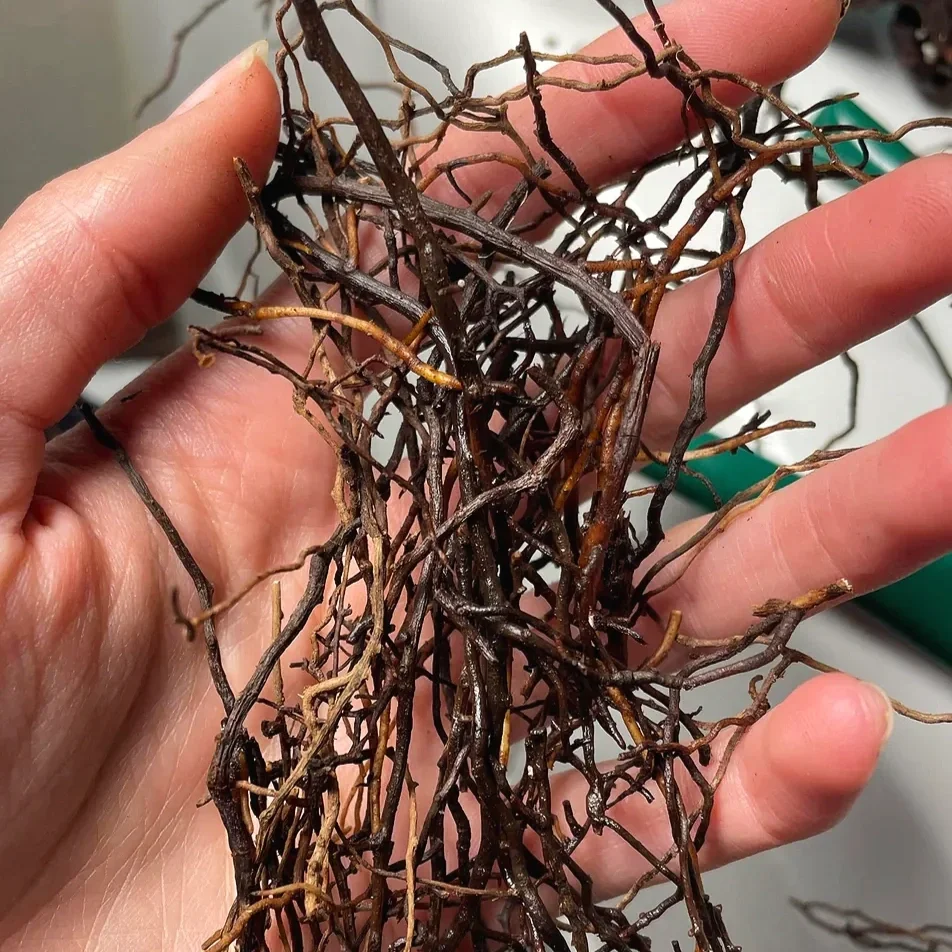
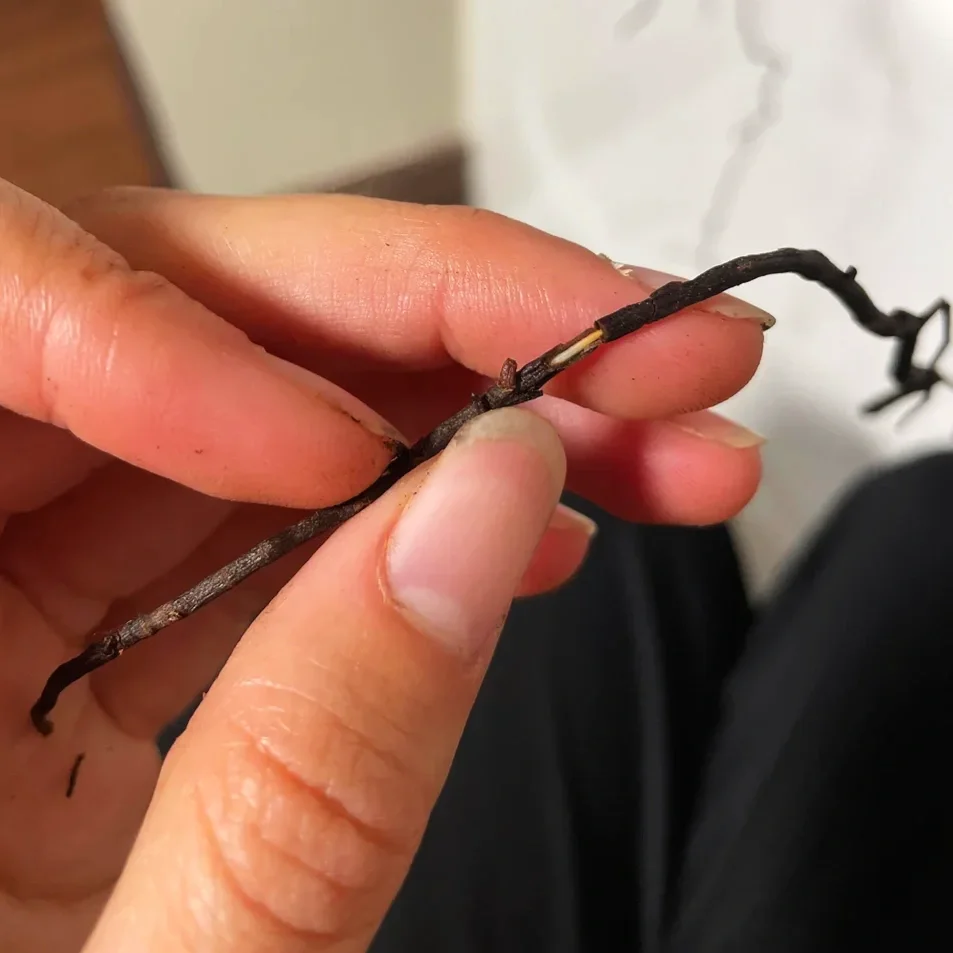
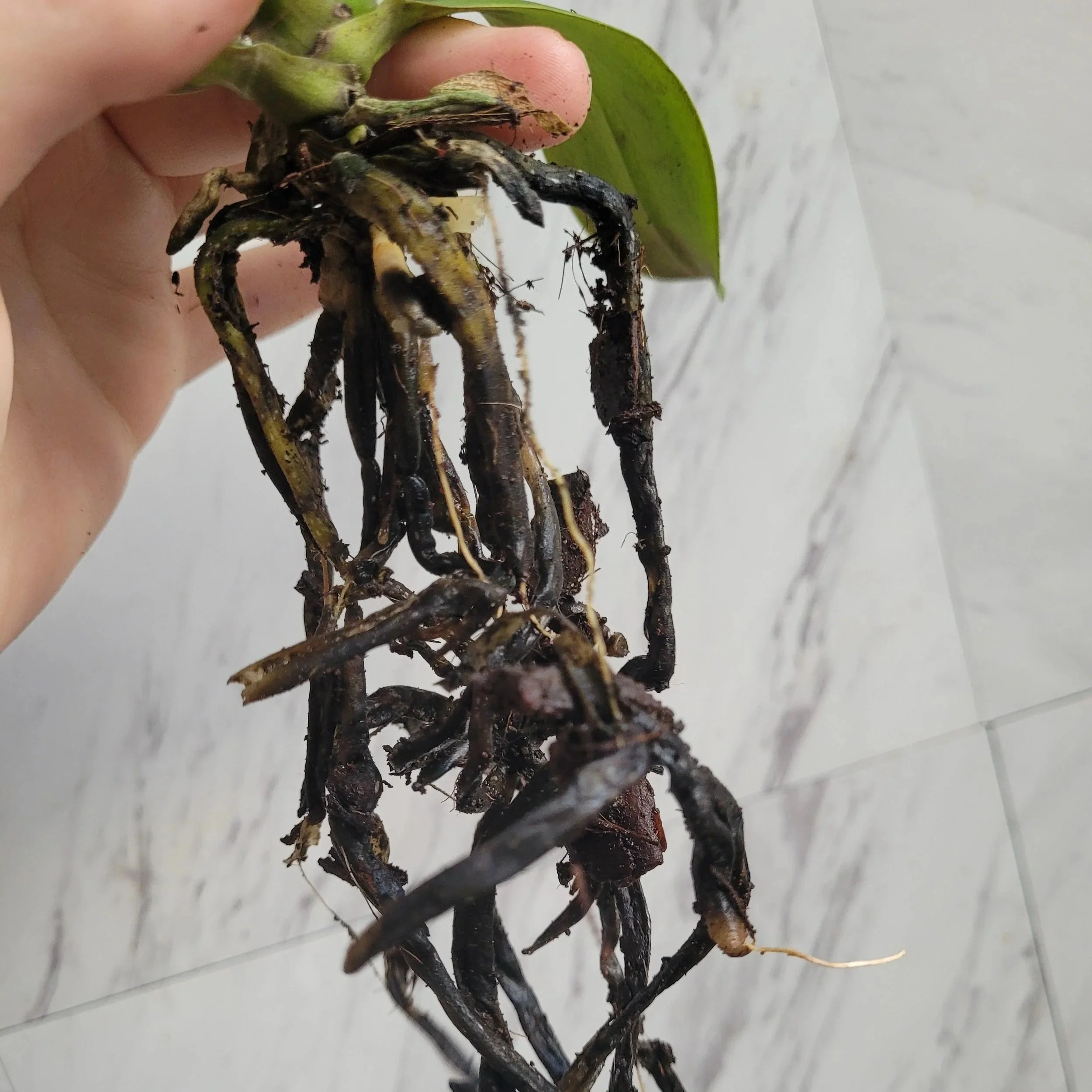
Here we see roots that have turned black and mushy and easily slide off the main root.
First Signs of a Larger Issue
Soil remaining wet too long, leaving fingers wet to the touch
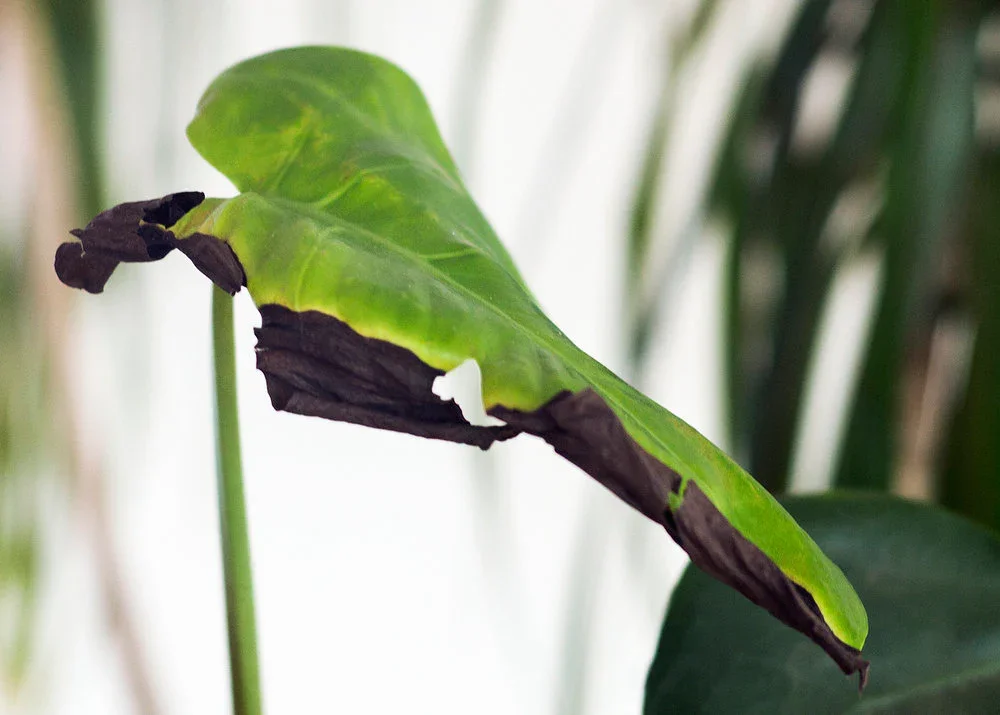
Yellow, limping leaves or black leaves
A sudden drop of healthy leaves
Mushy growth or stems, squishes upon touch
Odor from soil, more musty than earthen
Troubleshooting Root Rot and Helping Plants Recover
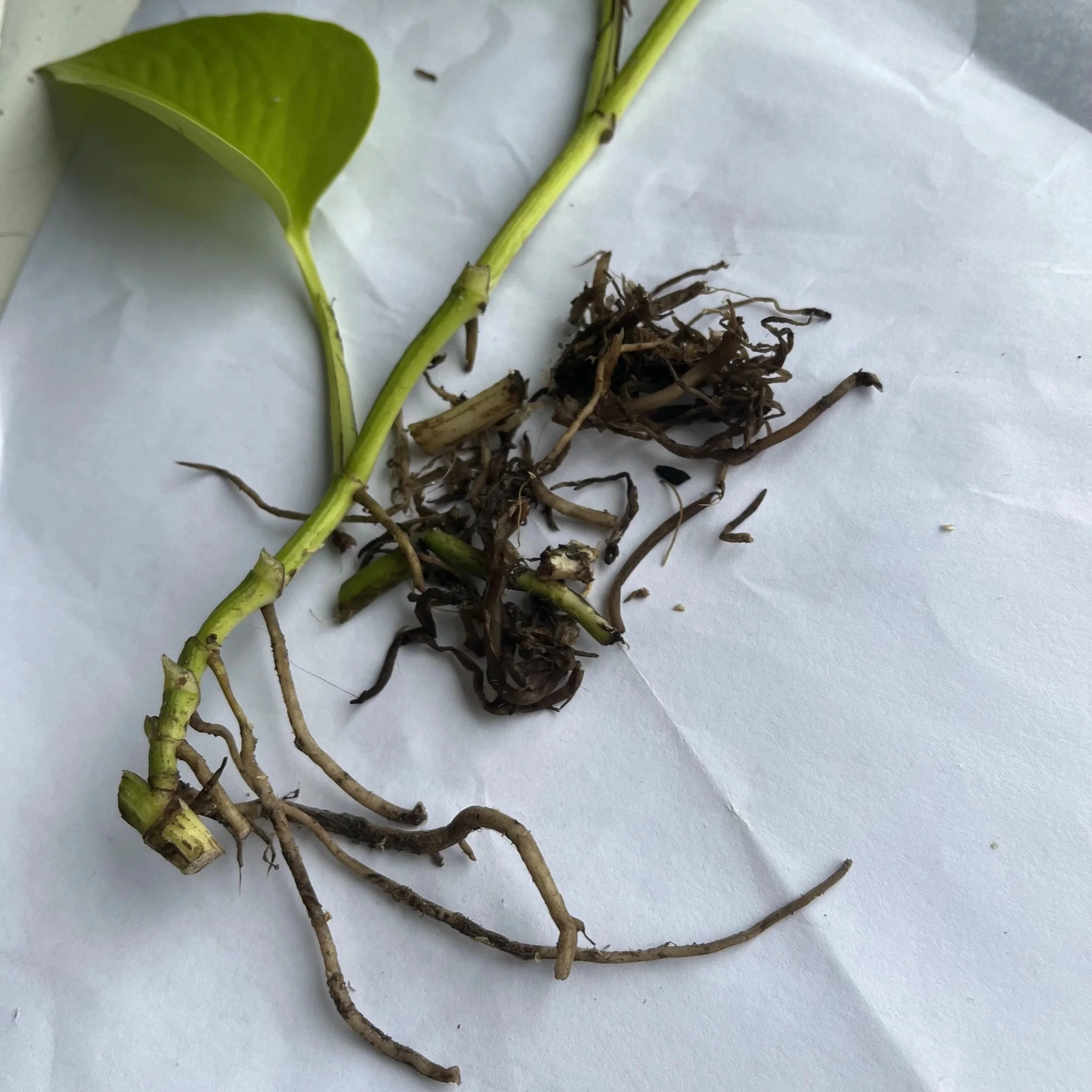
If you suspect root rot, acting quickly can make all the difference. Carefully remove the plant from its pot and inspect the roots. Healthy roots are firm and light in color, while rotting roots will appear dark, mushy, or even smell unpleasant.
Trim away any damaged roots with clean tools and repot the plant into fresh, well draining soil. After repotting, water lightly and allow the soil to dry more than usual while the plant recovers. In cases where root damage is severe, propagation from healthy stems or leaves may be the best way to start fresh and save the plant.
How to Avoid Root Rot with Better Watering Habits
Preventing root rot is much easier than it is to fix the problem later, and this mostly comes down to good drainage systems and mindful watering techniques.
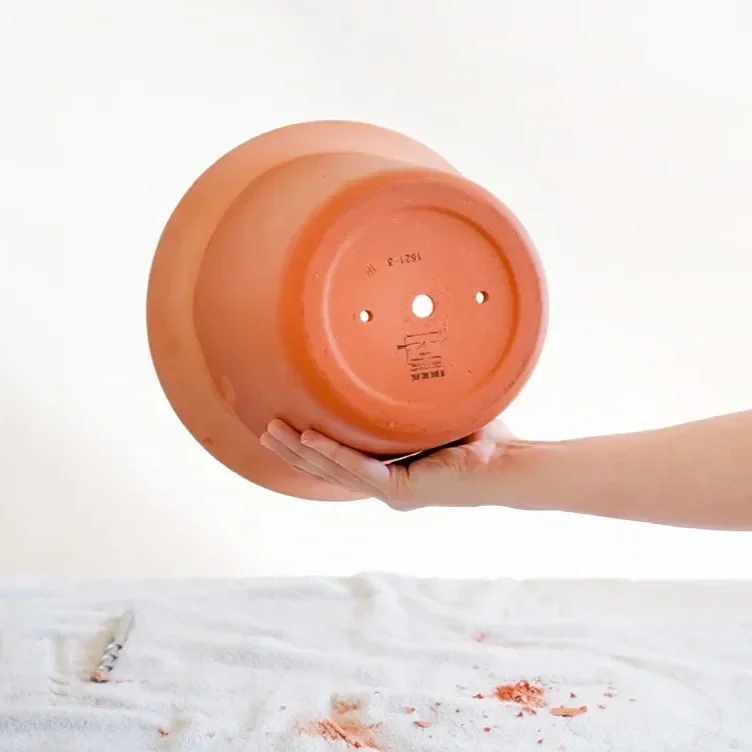
Always use containers with drainage holes and a potting mix that allows excess water to flow through easily. If drainage holes aren’t an option, a layer of rocks can be placed at the bottom of the planter to catch extra water run-off.
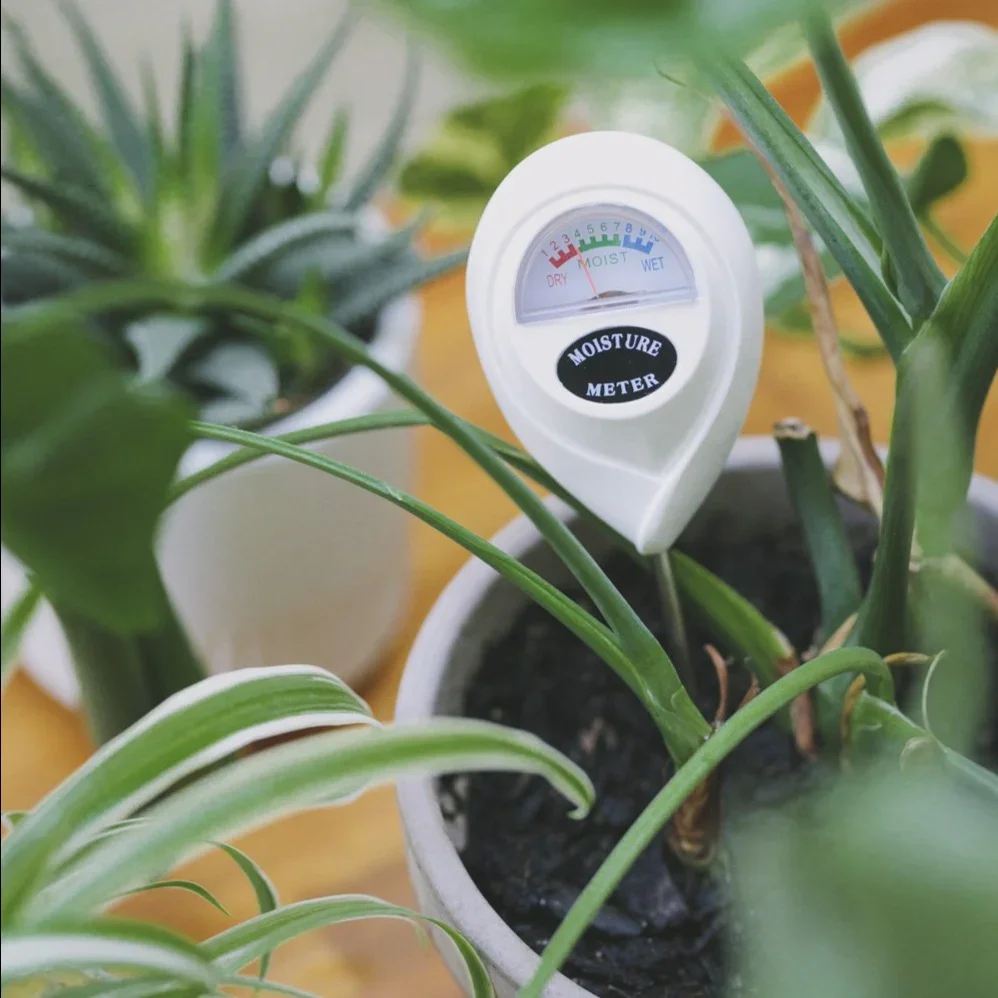
Before watering, make a habit to check the soil with a moisture meter rather than keeping to a strict watering schedule. The second line of defense should be your hands; the top few inches of soil should feel dry to the touch before you water again.
It is important to adjust your watering routine throughout the year, since most houseplants need less water during cooler, darker months when growth slows. Giving roots space to breathe is one of the best things you can do for your plants.
Common scenarios:
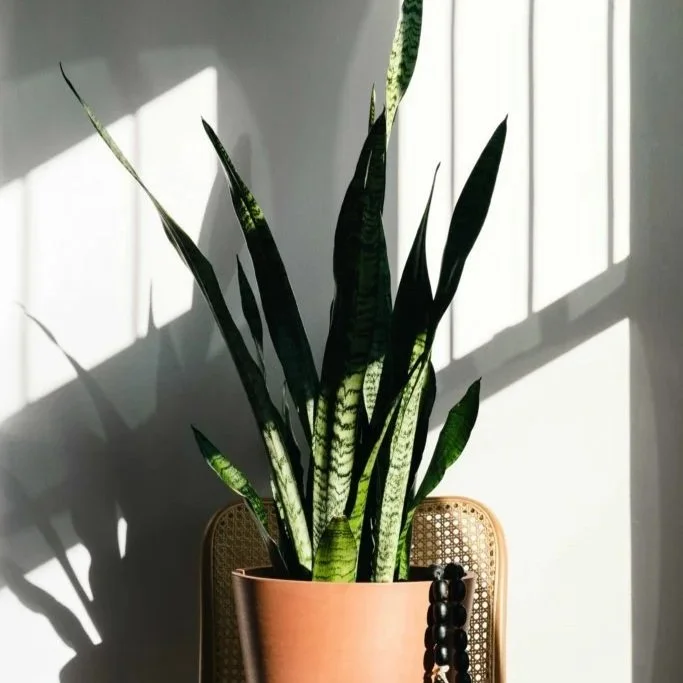
Snake plants and succulents frequently suffer from overwatering because they store water in their leaves and roots
Fiddle leaf figs frequently develop root rot when watered too frequently in winter
Pothos and philodendrons can tolerate missed waterings better than having consistently wet soil
Remember:
Always check soil moisture before watering, and never water wet soil
Empty saucers after watering so plants are never sitting in standing water
Watch for warning signs like yellow leaves, soft stems, or musty soil odors
